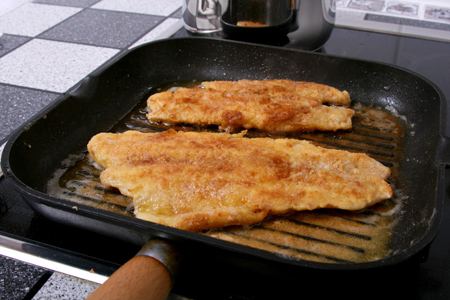
Porous surfaces become major challenges when smelly substances to make their way in. Cast iron pans are perfect examples of this, as unpleasant fish related odor remain the pan long after the fish has been cooked.
Fortunately, there are a variety of household solutions to clean and deodorize a cast iron pans and ensure the stench of fish is a thing of the past. By following the below solutions, you can be sure to that your cast iron pan will be smelling fresh and free of any fishy funk.
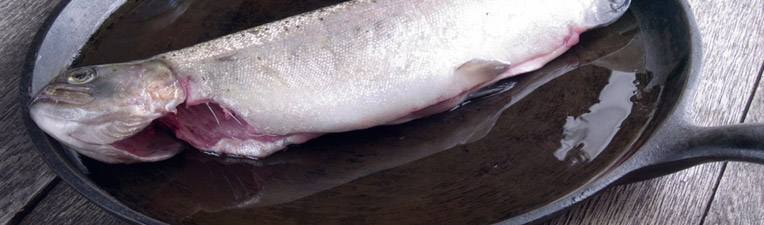
Fish Smell Remove Techniques from Cast Iron Pan
1 Boil Water In It
 Often, simply boiling water within the cast iron pan will do much to remove the odor. Heating the pan will help to release the fish iron for full absorption within the boiling water. Boil the water for 15-20 minutes and toss within the sink refill and begin again until the pan is completely free of fish related odors.
2 Baking Soda Bake Out
 Baking soda will work well to absorb unwanted odors within the cast iron pan. Create a solution of one part baking soda and five parts water within the cast iron pan. Place the solution over an open flame and cook it for 10-15 minutes until most of the moisture has evaporated from the pan. During this process, the pan will expand and release fish oil trapped within as the baking soda absorbs it. Finalize this solution by allowing the remaining baking soda paste to sit within the pan for 24 hours for the baking soda to absorb any remaining fish residue oils.
3 White Vinegar Fry
 Similar to baking soda, white vinegar should be cooked within the cast iron pan. Mix a solution of white vinegar and water in equal parts and cook for 20 minutes above an open flame on the stove top. Similarly, after 20 minutes have passed place the pan aside and allow for the remaining white vinegar solution to sit for 24 hours as the household acid combats remaining fish oils.
4 Oven Heat Upside Down
 This solution goes to work in extracting and drying up the existing fish oils within the cast iron pan. Provided that the pan is entirely iron, place the pan upside down within the over and heat it at 350 for 30-45 minutes. Heating it upside down will help to open up the iron pores and allow for fish oils to slip out and dry up within the hot environment. If any smell remains after after 3 minutes, place the cast iron pan back within the oven for another 30 minutes at 350 degrees fahrenheit until the smell is removed.
5 Lemon Juice Frying
 The citric acid within lemon juice will help to clear smelly fish residues from pores within the cast iron. Squeeze 2-3 lemons within the pan and add equal parts of water. Allow this solution to sit for an hour as the citric acid eats away at the fish oils. Next, place the plan over an open flame on the burner for the solution to begin to boil and neutralize any remaining fish-related funk within the pan.
6 Onion & Garlic Re-Seasoning
 As a final solution, you can try to cover the fishy smell by cooking onions or garlic within the pan. Start by clearing as much fish charred remains and oils from the pan by scrubbing it down with dish detergent within the sink until it is clean. Place olive oil along the top surface and add a fully chopped up onion and garlic clove within the pan. Begin frying the contents and continue to cook until the items have been lightly charred. At this point, the smell of fish within the pan will likely be replaced with the sutile aroma of garlic and onions.
[contact]
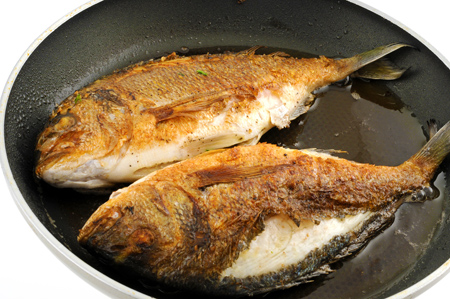
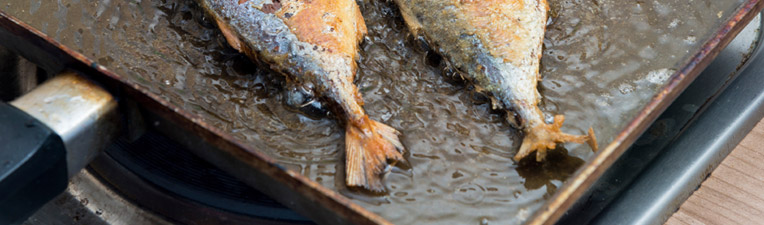
 Taking this step prior to cooking fish will save you much headache later on. Be sure to open all of the windows within the kitchen as well as the windows within any rooms that connect directly with your cooking space that do not have a sealable door. As another rule of thumb, leave the windows open 10-15 minutes after you are finished cooking.
 Running the stovetop fan does much to suck out the most odorous scent of cooked fish from the kitchen and send it directly outside. The fan is located directly over the oven and stove, and works to catch the fish scent as it naturally climbs upwards prior to spreading throughout the home. As a preventative step, always begin the fan prior to beginning to cook your fish.
 Keeping the kitchen door closed is essential to making sure that the smell of fish does not make it’s way thought the home. As a guiding principle, close the door prior to cooking and keep the door to the kitchen shut a total of 10 minutes after the cooking has completed. To take this step one further, a towels can be used to seal up the space under the kitchen door where the stench of fish may slip though if otherwise not in place.
 Cooking fish within the oven creates less of a characteristic fishy smell than cooking fish on the stove top. Be sure to still run the stovetop top fan as this will work to further minimize the odors that are coming out from the oven.
 Use of cheap cooking oils like vegetable oil can add to the odor problem. Many on them have a characteristic smell that can intensify the fishy stench within your home. Whenever you are frying fish on top of the stove top, always make an effort to cook with olive oil.
 Once you’ve finished cooking your fish, try spraying down the kitchen with Febreze or another type of scented spray. In addition the the windows being open and the oven fan running, this should be enough to disguise any signs that a fish has been cooked within the kitchen.
 Bleach works in a similar fashion to strip the walls of organic fish related build-up. Mix a solution of one part bleach with ten parts hot water, and proceed to scrub down the walls, ceiling and cabinets of the kitchen with a disposable rag. The windows can be open to speed the drying and minimize the chemical odor of the bleach within the kitchen.

 As your first step, you will want to clean all of the contaminants from the freezer with a mixture of hot water and dish soap. Before you begin, you will want to unplug the freezer to liquify any ice remnants which may be harboring the odor. Next, mix two teaspoons of dish detergent with three cups of warm water and proceed dunk a dish rag within the mixture and wipe down the entire interior of the freezer. Make sure that no fish contaminants are left within the freezer before moving on.
 Once the contaminants have been cleared out, you can work in absorbing any of the remaining smells out of the freezer. Stuffing the freezer with crumpled newspaper dipped within vanilla extract is a popular way to remove the odor. Fill a small saucer with vanilla extract and lightly dip the edges of crumpled newspaper into the solution, and place within the freezer. Once the freezer has been filled, close the door and allow 2-3 days for the paper to absorb the unwanted fish odor and replace it with subtle aroma of vanilla extract.
 Citric acid works well at cutting through odors and adding freshness within a confined space. Mix a solution of one part lemon juice with four parts water within a spray bottle. Spray down the entire interior of the freezer and close the door for 6-12 hours. After this time has passed, return to scrub down the interior one final time with hot water to remove any trace of the juice from the freezer’s interior.
 The act of boiling apple cider vinegar and placing it within a freezer may sound strange. However, this household acid works well at combating fish odors within enclosed spaces. Fill a pot with one part apple cider vinegar and three parts water and bring it to a boil. Once the pot has reached a boiling point, pour the steaming contents within an large heat resistant bowl and quickly place within the freezer, making certain to close the door. After 4-6 hours return to remove the bowl and wipe down the vinegar stream from the walls of the freezer.
 Coffee grounds do more than make a cup of morning brew. They also work well at absorbing odors and replacing enclosed spaces with the gentle scent of coffee beans. First, make sure the freezer is unplugged, and that no moisture exists within the space. Measure one to two cups of coffee grounds and spread them along the bottom of the freezer floor making sure that no area is left untouched. Close door and allow 2-3 days for the coffee grounds to absorb the unwanted fish odor. Once complete, sweep out the coffee grounds and place the freshened freezer back within use.
 Covering the flooring of the fish ridden freezer with activated charcoal briquettes can do much to absorb the unwelcome smells. Selected 10-12 charcoal briquettes and place them strategically throughout the bottom of the freezer floor. Close the door and provide 5-7 days for the actives charcoal to absorb any remaining fish related organic odors. Once a week has passed, open the freezer door and simply remove the activated charcoal briquettes.
 If placing the freezer outside is an option, doing so will do much in deodorizing the enclosed space. The open space, fresh air and even ultra violet rays of the sun have the effect of neutralizing organic fish related odors and freshening enclosed space. To apply this method, flip freezer face up outside, and open the door so that ultraviolet rays can make their way within. So long as the days remain sunny, leave the freezer like this for 2-3 days before returning to bring the freezer back within the house. As a note of precaution, place a tarp under the freezer while it is outside to prevent dirt and other material from making it’s way within the coils and working parts of the appliance.
 This extract is very potent and can cover a fish odor with a pleasant aroma. Mix a solution of one part vanilla extract with five part water within a microwave safe bowl. Place bowl within the microwave and run for 3-4 minutes until the walls of the microwave have been covered with moisture. After an hour has passed, return to wipe remaining moisture from the interior.
 This household brew can double as an excellent solution for removing fish odor. Brew two cups of coffee and heat further within the microwave to cover walls with warm coffee moisture. Finally, return after an hour and wipe down the walls with a dish towel.
 Hot water and dish detergent can be a simple solution for removing odor from the inside of a microwave. Dampen a dish towel and infuse the towel with two teaspoons of dish detergent. Place wet towel within the microwave and run for 3-4 minutes until the interior walls are covered with moisture. Return within 30 minutes to wipe down remaining moisture.
 It is important that the carpet is treated immediately after the fish juice spill is made. This will help prevent the juices from getting too deep within the carpeting and the underlying padding.
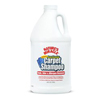 This substance works wonders at eliminating organic fish odors. It harnesses the power of active enzymes which slowly eat through organic fish juice residues that remain within the carpeting fiber. Pour a large portion on the location of the spill and provide 24-48 hours for the active enzymes to work their magic. After this time has passed, return to blot dry the remaining cleaning moisture from the carpeting.
 The alcohol within rubbing alcohol works well at sterilizing organics and neutralizing odors. Create a formula of rubbing alcohol and water in equal parts, and pour it over the location of the spills. After 24 hours has passed, you can blot dry any remaining moisture from the carpeting.
 Usually, washing your hair is enough to free your hair of this odor. When it is not enough, try washing your hair a second or third time until the smell goes away.
 Work coconut oil within hair and let sit for for a minimum of ten minutes. Afterwards, wash oil from hair with shampoo to remove any remaining coconut oil residue.

 Fish aromas are often difficult to remove from clothing with just one wash. If the smell remains after the first wash, try washing it a second or third time.
 Hanging your clothes outside within the sun to air dry can work wonders for removing odors from clothing. The natural solar rays and wind work to neutralize and carry off the smell.
 Baking soda is one of the best tools in removing fish based odors. If you know that your clothes will need an additional boost to remove odor, add a 1/2 cup of baking soda to your wash load along with your normal laundry detergent.
 This compound works in breaking down bacteria and organics, and can work miracles with eliminating fish odors within your clothing. Simply add one cup of hydrogen peroxide with your wash along with clothing detergent to boot the residual odor out of your clothing.
 Borax is a household cleaning ingredient used within a wide range of products. Add a 1/2 cup of borax to you normal wash load along side your normal detergent.
 This substance works great for it’s ability to cut through organic materials. The alcohol within the mixture drys and sweeps off odors as the sanitizer evaporates.
 As a last resort, you can quickly splash your hands with nail polish removal. This substance is quite strong, and it is recommended that you wash hands off shortly after using this solution.