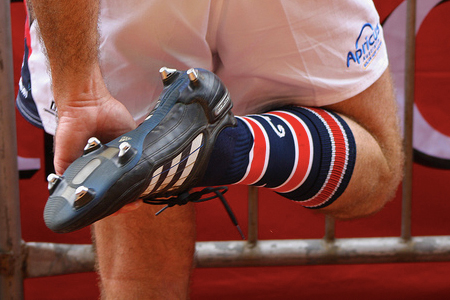
Rugby involves a range of brute strength and physical endurance. In the process, rugby cleats often bare much of the brunt of the this demanding sport. Sweat and skin particular build to create a dank smelly interior.
Fortunately, a range of household ingredients exist that can help to keep this unwanted odor in check. The following list of solutions can be handy for adding freshness within your rugby cleats to ensure that you give the odor a final kick.
Smell Removal Solutions for Rugby Cleats
1 Air Out
 Oftentimes, all that is needed to properly deodorize shoes is to place them outdoors within the sun. Find a place within the yard where they will receive a minimum of eight hours of direct sunlight and leave them outside for the day. Often the cleats will require two to three days to properly allow to air out. As a solution, this best used when you have a few days between use of the rugby cleats.
2 Hydrogen Peroxide Rag
 Much of the odor within shoes comes directly from bacteria that builds within the cleats. Living off dead skin cells, sweat and the dark moist environment it often finds used cleats to make a good home. Fortunately, hydrogen peroxide works to kill bacteria on the spot. Soak two hand rags within hydrogen peroxide and stuff one inside each of the cleats. After letting the hydrogen peroxide soaked rag sit for 4 to 8 hours, the rag can be remove and the cleats can be placed aside to air dry.
3 Baking Soda + Lemon Wedge
 The combination of baking soda and lemon juice and wedges can do much to cut and absorbe the bacterial odor within the shoes. Measure a scoop of 1/4 cup of baking soda to pour within each shoe. Upon pouring it in, proceed to shuffle the cleat to ensure that the baking soda covers the interior of the sporting footwear. As a final step, cut a lemon into four parts and squeeze the juices into a rag. Rub the interior of the cleat with the rag them place two used quarters of the lemon wedges within each shoe. Allow to sit over night as the citric acid neutralizes the bacterial and the wedges and baking soda absorbs the odor.
4 Enzyme Spray + Newspaper Stuff
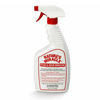 A enzyme based spray combined with wadded newspaper can work fast in removing sweaty foot stench for the cleats interior. Begin by spraying down the interior of the rugby cleats to allow the active enzyme to begin to eat through all of the bacteria that is causing the odor. Once performed, stuff the entire interior with wads of newspaper until it has been completely filled and allow it to sit over night. By the morning, much of the odor will have been absorbed within the newspaper to leave the cleats smelling fresh.
5 Freeze + Sun Dry
 Putting these two elemental states together will work to kill the foot related bacterial odor and freshen the cleats. Start by placing the cleats within a sealed ziplock bag and putting them within the freezer for 24-48 hours. This cold temperature will have the effect of killing the bacteria to give the shoes fresh start. Next, place the rugby cleats within direct sunlight for 8 hours to have the effect of drying out the odorous residues and letting the open space and fresh air carry it away.
Photo Credit: istolethetv
[contact]
 Placing the the heels outside will leverage several natural elements for deodorizing the footwear. The fresh air and open space will help in diffusing the odorous residues and the ultra violet rays will work to neutralize the odorous residues on the spot. When applying this solution, be sure to place the heels in a location within the yard where it will be sure to receive a minimum of 8 hours of direct sunlight. If an odor remains after 8 hours, they can be placed outside in direct sunlight for an additional day or two until it has freshened up.
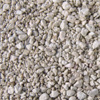 As a product meant for a cat’s waste, many are surprised that it can yield effective results when used within the interior of shoes. Keeping a small cup of fresh cat litter by the bed can be used to pour into the interior of shoes nightly. Pour approximately 1/4 to 1/2 cup of cat litter within each heeled shoe. Upon pouring in shuffle to allow the cat little bits to come into contact with all areas the the foot would normally come into contact with. In the morning, this cat litter can be poured back into the cup to be used the following night.
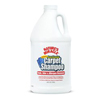 If the above solutions have not been effective, using enzymes to eat through the smelly residues is a viable option. First, wad up six to eight balls of paper towels. Next, lightly dip the edges within a disk of enzyme cleaning solution and proceed to stuff them within the interior of the shoe. Once these wads fill each shoe, allow the wads to sit for 24-48 hours before removing them and placing the shoes aside to air dry any remaining moisture.
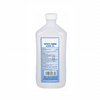 In a similar methodology to enzyme wads, rubbing alcohol soaked cotton balls can used to deodorize the interior of heeled shoes. Fill a small bowl with rubbing alcohol and water mixed in equal parts. Proceed to dip cotton balls and lightly place them within the interior of the shoes. Once the area that the foot normally comes into contact with is covered by these dipped cotton balls, you can place the shoe aside for 24-48 hours. After this time period has passed and the mixture has evaporated, the cotton balls can be removed and the shoes can be put back into use.
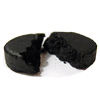 With enough time, the use of activated charcoal can work well in absorbing difficult odors from the interior of high heels. Begin by finding an old pair of nylons and cutting the leggings apart into two different parts. Next, drop two to three charcoal briquettes into each and tie a know to enclose them within the foot areas of the leggings. Finalize by placing the nylon enclosed charcoal briquettes within each of the high heels and allowing them to sit over night. Continue using these activated charcoal inserts nightly until no odor remains within the shoes.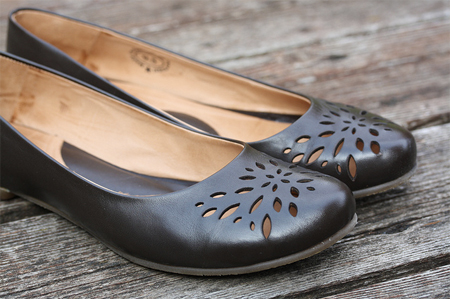
 Most people associate this material with morning brew, but seldom know that it has powerful absorption capabilities. Fill four coffee ground filters with two teaspoons of coffee grounds each. Pull the loose ends of the filter together and bound closed with a rubber band. Once completed, place within the interior of each flat and allow the shoes to sit over night. If smells still remain after the first night, place these same filter back within the shoes for a seconnd or third night. If successful, the coffee grounds will have lifted the foot-related odor and replaced it with the subtile scent of coffee beans.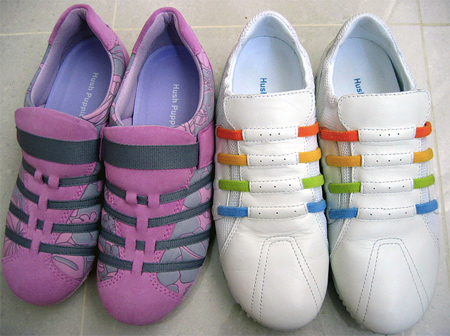
 If you find yourself wearing your Hush Puppies everyday, this might be the source of the odor. When these shoes have not had the proper time to breath, moisture remains within them on a constant basis and the odorous bacteria living within the shoes has a chance to grow. As a solution, rotating the shoes with another pair will ensure that they air out and never get to this point.
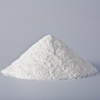 This incredibly absorbant powder works wonders at pulling in odors and freshening the insides of shoes. As a preventative solution, a quarter cup of the powder can be poured within shoes every night before going to bed. Place baking soda by the bed will help to ensure that you do not forget to apply nightly. As well, be sure to shuffle the Hush Puppies to ensure that the powder reaches the toe area of of the hush puppies where the greatest amount of the odor lies.
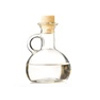 This household acid is another effective solution for cutting through difficult foot odors within hush puppies. Before application, wad up several paper towels into balls. Lightly dip the paper wads into a solution of white vinegar and water in equal parts. Stuff these paper balls within the shoes until no space within them remain. Allow these wads to sit for 24 to 48 hours as the white vinegar deodorizes the interior. Once completed, remove the balls from the interior of the shoes and place the Hush Puppies outside to allow for air drying.
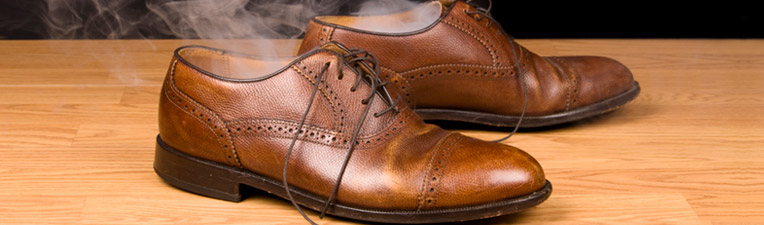
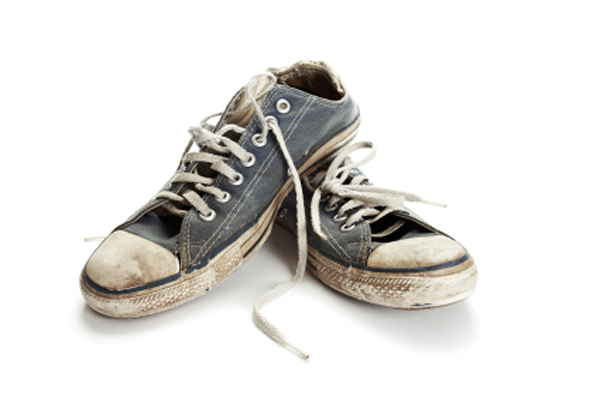
 For truly difficult foot-related odors, using activated enzymes to literally eat through the odors can be an effective solution. This type of cleaner is available for purchase at pet stores and most large supermarkets. Wad up several paper towels and lightly dip them into a solution of enzyme cleaner. Once you have done this with several paper towel, proceed to stuff the towels within the interior of the sneakers. Once the sneakers have been completely stuffed with enzyme dipped paper towels, allow for them to sit for 24 hours to allow for the enzymes to work there magic. After a day has passed, the paper towel wads can be removed and the freshened shoes can be placed back in use.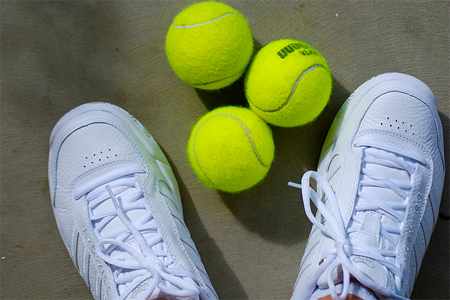
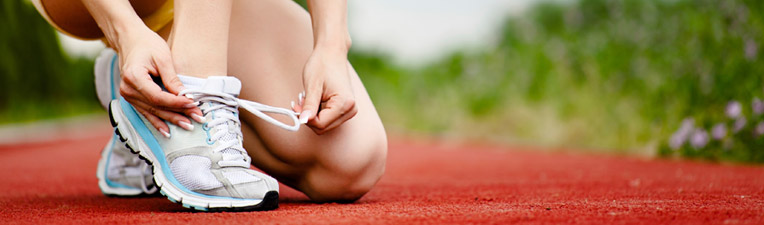
 When tennis shoes are worn too often they can develop an unwanted foot related odor. Without sufficient time to air out, the shoes will maintain a warm and moist environment that allows bacteria to grow and thrive. As a preventative measure, consider rotating your tennis shoes with an alternative pair. This will provide the needed window of time for sweat and other moisture in the footwear to air and dry out.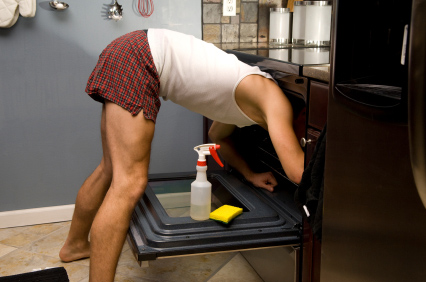
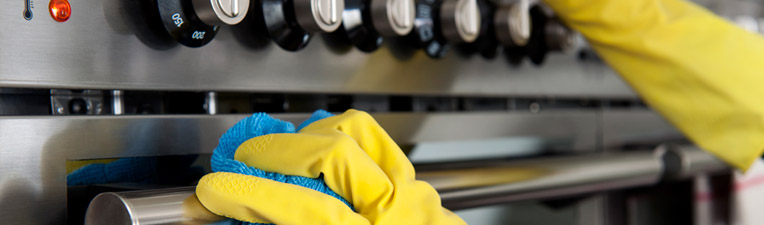
 Often, these smelly side effects of an oven are a direct result of bit of food which have fallen of the oven trays and reside immediately above the broiler. Simply searching out these elusive bits and removing their chard remains is usually all it takes to return freshness to an oven. This takes all of 2 minutes to perform and should always be your first deodorizing step.
 When there is noticeable build-up of residue along the bottom of the oven, a thorough scrubdown with the rough part of a sponge may be required. As long as the food-based residue continues to burn, you can count of the fact that it will create smoke and an unpleasant odor. Fill a large bowl with hot water with 2-3 teaspoon of dish detergent mixed in. Dunk the sponge within the mixture and proceed to scrub down the interior of the appliance making sure to clear away any remaining residues that may sizzle and ignite during use.
 The citric acids within lemon juice have a way of making their way within the surface areas of the oven to neutralize food based odors. Mix a solution of one part lemon juice with 5 parts water within a spray bottle. Proceed to spray down the entire interior of the oven and close the door. For best results, be sure to allow for the citric solution to soak in for at least 3-4 hours before using the oven.
 When all else has failed simply boiling your problems away can work as a last result. Set the oven to it’s max and run for 20-30 minutes as needed. Often this will cause the smell to increasing become worse during this period, however this phase will soon pass. You will know that the oven have been clear of the odor once the smell has dissipated and you see no visible smoke escaping from the cracks within the oven door.
 One of the reasons that the boots develop an odor is that they are being worn too often. When the same pair of boots are worn daily, a moist environment is maintained that becomes inhabited by odorous bacteria. By giving your bots a day or to air out and dry, you will prevent bacteria developing and will ensure that your boots stay fresh.